New briefing paper backed by two leading red squirrel scientists calls on ministers to close a legal gap shut for bats and newts almost twenty years ago
ritain’s endangered red squirrels have weaker legal protection for their breeding sites than beavers, campaigners warn today, as housing, holiday development and felling put pressure on some of their last remaining habitat.
Under the Wildlife and Countryside Act 1981, a person accused of killing a red squirrel or destroying its drey in England or Wales can rely on a defence if they show that the act was the incidental result of a lawful operation and could not reasonably have been avoided. The equivalent defence under the Habitats Regulations was removed for European protected species, including bats, dormice, otters and great crested newts, in 2007. Red squirrels are not on that list.
The Forestry Commission’s own guidance states: “There is no mechanism for licensing forestry operations where they may cause damage or disturbance to red squirrels.”
Save Our Reds CIC, publishing its first briefing paper to mark Red Squirrel Awareness Week (5–11 October), is calling on ministers to add red squirrels to Schedule 2 of the Conservation of Habitats and Species Regulations 2017, the list that already protects beavers, bats, dormice and otters. Listing would bring red squirrel breeding sites and resting places under the stricter Habitats Regulations regime, which makes their damage or destruction an offence without requiring proof of intent. In England, work that would otherwise breach those protections would require a licence from Natural England.
The paper sets out a proposed route using existing powers to amend the legislation through statutory instruments, without a new Act of Parliament. Beavers were added to the regulations in England in 2022 and in Wales in March this year.
The paper (below), developed with Dr Craig Shuttleworth and Dr Peter Lurz, follows Natural England’s Red Squirrel Recovery Strategy, published in April, which warned that on current management red squirrels face a high probability of extinction across mainland England within about 25 years.
Download the full briefing paper (PDF)
Pressure on red squirrel habitat
Three sites highlighted by the campaign illustrate the pressures facing remaining red squirrel habitat:
- High Harrington, Workington, Cumbria. Gleeson Homes has applied to build 79 homes on greenfield farmland off Woodville Way (Cumberland Council ref FUL/2022/0159). The developer’s preliminary ecological appraisal and its 2024 update identified impacts on red squirrels, among other species, as “likely to occur” and recommended avoidance and mitigation measures, including woodland retention and a buffer. Residents say they have filmed red squirrels in the hedgerow where the site’s access road would run. The application, lodged in 2022, remains undecided.
- Ainsdale, Sefton. In July, Sefton Council’s cabinet declared the former Ainsdale Hope School site surplus to operational requirements and authorised access for housing feasibility work. This did not grant planning permission. Residents say its woodland and green space support red squirrels. Separately, in July, squirrelpox was confirmed in neighbouring Formby, part of England’s most southerly mainland red squirrel stronghold. After the last major outbreak, in 2008, the population there fell by an estimated 80 per cent.
- Penrhos, Anglesey. A reserved matters application (RM/2026/2) seeks detailed approval for 493 leisure units, including lodges and cottages, at Penrhos Coastal Park. Campaigners say ecological surveys carried out between 2023 and 2026 recorded red squirrels. The application remains undecided and is to be determined by councillors. The 2017 Regulations also apply in Wales, where separate action would be needed to extend protection to red squirrels.
Under Schedule 2, work that would damage or destroy red squirrel breeding sites or resting places would require a licence, which can be granted only for a permitted purpose, where there is no satisfactory alternative and no detriment to the species’ conservation status.
Dr Peter Lurz, Honorary Fellow at the University of Edinburgh and a red squirrel ecologist whose research has focused extensively on red squirrel conservation and forest management, said:
“The current system of regulation and the legal framework allow timber extraction to be prioritised over red squirrel conservation, with impacts on survival that are not yet well understood. We need better protection and much greater consideration of our endangered red squirrels in decisions affecting their habitat.
“Consideration of red squirrel habitat within planning and forestry decisions should be mandatory. I completely support the proposed amendment to the Habitats Regulations in England, and I hope it inspires similar action in Scotland and the other devolved nations too.”
Marie Carter-Robb, founder of Save Our Reds CIC, said:
“Today it is easier to destroy a red squirrel’s home than a bat’s. Beavers, driven to extinction here around 400 years ago and since returned, now have stronger protection for their breeding sites than a native animal that has lived in Britain for ten thousand years. That cannot be right.
“From Cumbria to Anglesey we keep seeing the same pattern: red squirrels are known to be there, and their habitat still faces development and felling pressures. Ministers already hold powers to strengthen protection through secondary legislation, and the beaver precedent shows that species protection can be extended.
“This is not a silver bullet. Red squirrels face disease, grey squirrels and habitat loss. But stronger legal protection is a practical step the Government could take now, before more strongholds are lost.”
Dr Craig Shuttleworth, one of Britain’s leading red squirrel conservationists, said:
“We are now perilously close to losing red squirrels from large parts of Britain. In many areas, it feels like we’re not at the eleventh hour, but eleven seconds to midnight. We have the knowledge, the legislation and the conservation expertise. What is needed now is the political will to ensure those protections are properly applied and enforced.”
Multi-award-winning wildlife filmmaker Terry Abraham, Save Our Reds CIC’s first official ambassador, commented:
“Red squirrels are one of our most iconic native mammals. The public clearly cares about them and it’s time their protection matched their importance.”
The campaign is also calling for stronger enforcement of existing wildlife law, mandatory wildlife impact assessments before woodland felling, independent auditing of biodiversity commitments, more rangers in red squirrel strongholds, and continued investment in squirrelpox vaccine and grey squirrel fertility control research. Its petition, launched in 2025, has more than 110,000 supporters.
Link to newly published briefing paper: briefing paper (BP1/2026)
Conservation Action Framework: saveourreds.framework.pdf
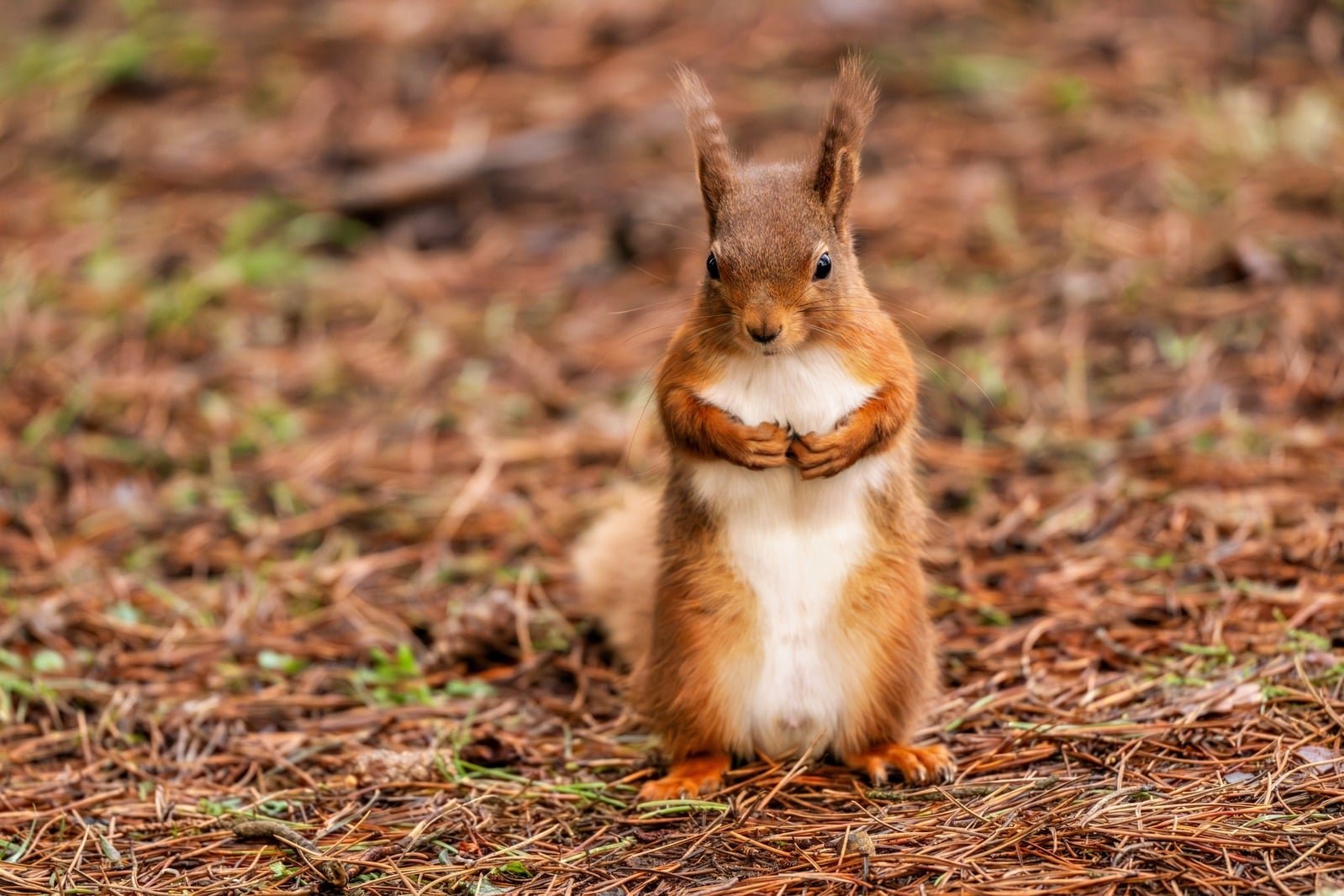
Photo caption: a red squirrel by David Knighton